From the article
VictoriaMetrics Observability Blog
Author
- Adam Yates
- Aditya Kulkarni
- Adrian Bridgwater
- Agustín Gallego
- Alex Woodie
- Alexander Marshalov
- Aliaksandr Valialkin
- Aman Agarwal
- Antony Savvas
- Artem Navoiev
- Bill Tanner
- Cer6erus
- Claudio Masolo
- David Marshall
- Denys Holius
- Derek Foster
- Diana Todea
- Dima Lazerka
- Dmytro Kozlov
- Emily Foster
- Fintech Herald
- Fred Navruzov
- Gary Flood
- Gonzalo García Labat
- Ivan Yatskevich
- Jaime Hampton
- Jan Sokol
- Jason Bloomberg
- Jason English
- Jean-Jerome Schmidt-Soisson
- Jesús Espino
- Joab Jackson
- John Seekins
- Jose Gomez-Selles
- Julien Menan
- Karan Virdi
- Laveesh Kocher
- Leigh McGowran
- Lindsay Clark
- Marc Sherwood
- Mark Baker
- Martijn Van Best
- Martin Veitch
- Mathias Palmersheim
- Michelle Sebek
- Nick Gibson
- Nikolay Khramchikhin
- Pablo Fernandez
- Phuong Le
- Rafal Szypulka
- Renato Losio
- Richard Speed
- Roman Khavronenko
- Vadim Alekseev
- Vadim Rutkovsky
- Yurii Kravets
- Zakhar Bessarab
- Zhu Jiekun
No matching authors found.
Category
- Benchmark
- Community
- Company News
- Customer Stories
- Developer Experience
- Distributed Tracing
- Events
- Go
- Go @ VictoriaMetrics
- High Cardinality
- Kubernetes
- Monitoring
- Observability
- Open Source Tech
- OpenTelemetry
- OTLP
- Performance
- PostgreSQL
- Product News
- Tech Talk
- Time Series Database
- VictoriaLogs
- VictoriaMetrics
- VictoriaTraces
No matching categories found.
Filter: Go
Blog posts
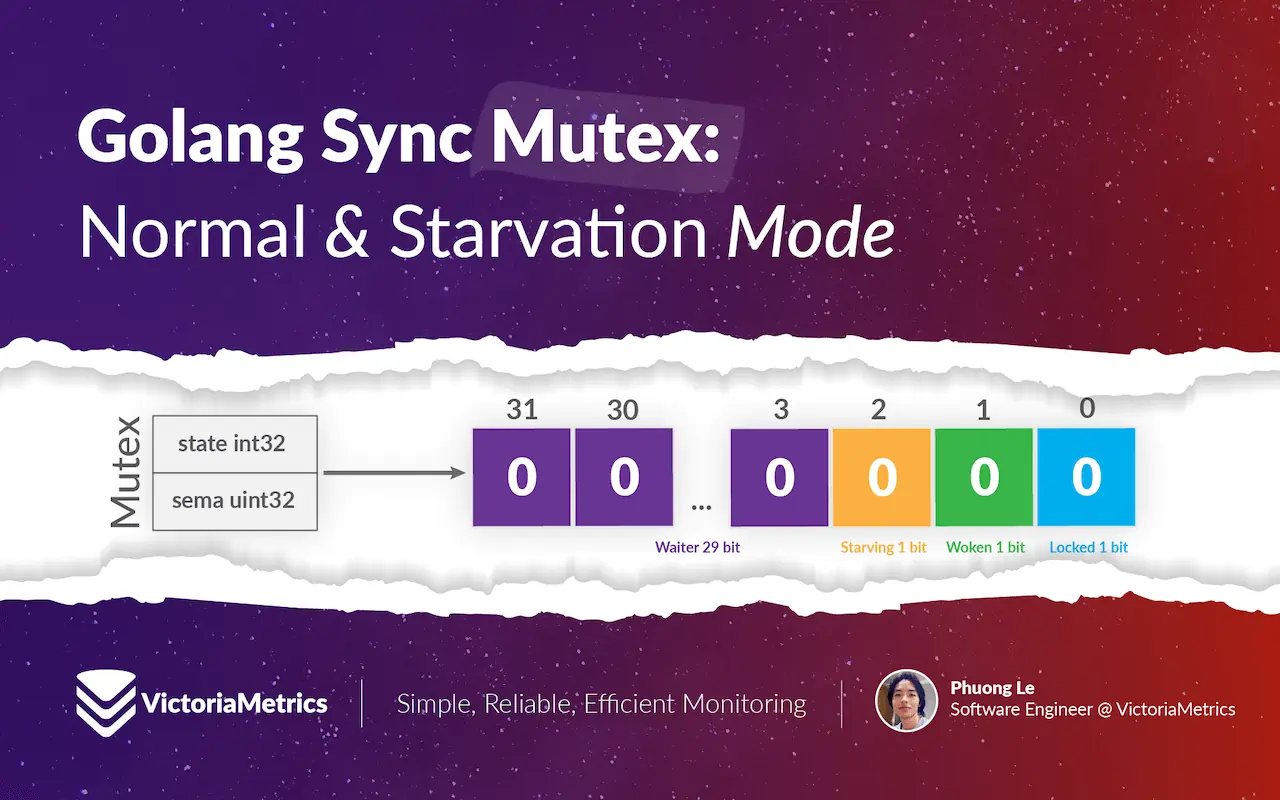
Go sync.Mutex: Normal and Starvation Mode
Mutex in Go has two main flows: Lock and Unlock and 2 modes: Normal and Starvation Mode. The state field of mutex is a 32-bit integer that represents the current state, it’s divided into multiple bits that encode various pieces of information about the mutex.
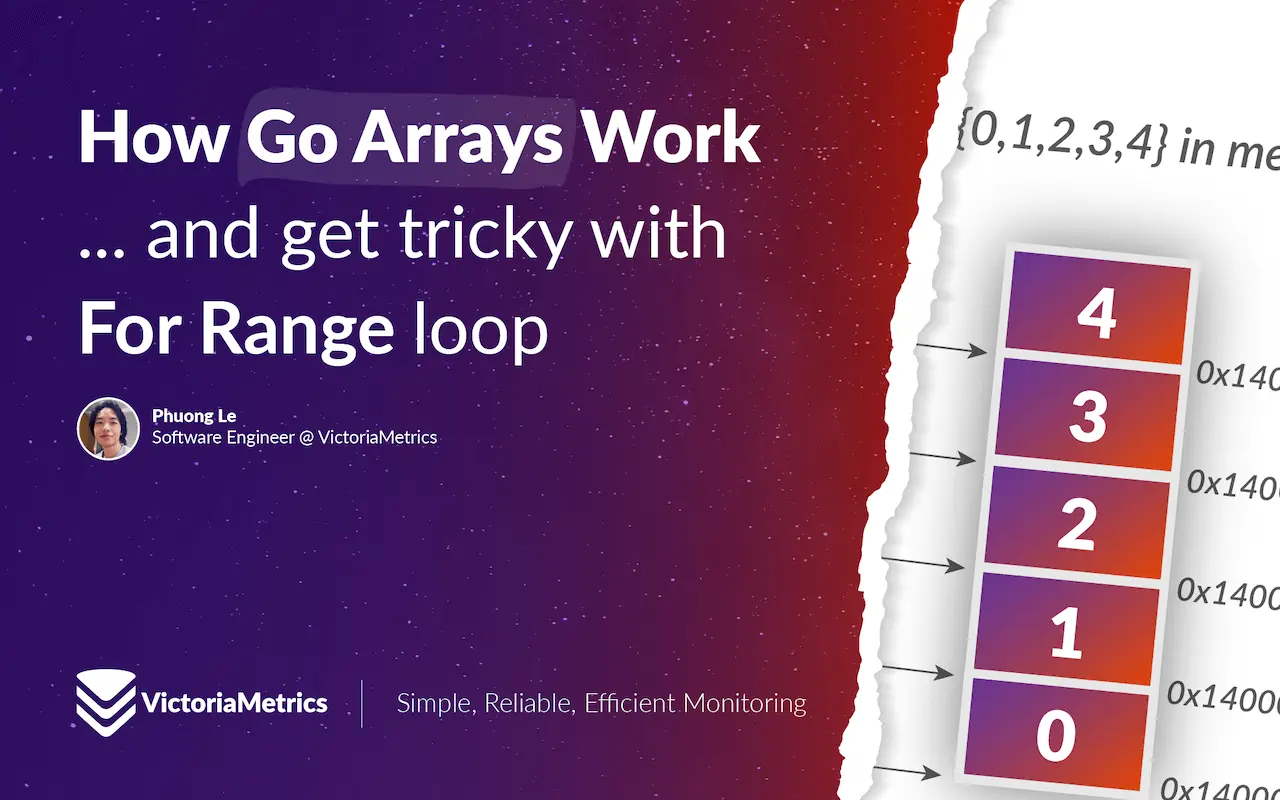
How Go Arrays Work and Get Tricky with For-Range
As always, we’ll start with the basics and then dig a bit deeper. Don’t worry, Go arrays get pretty interesting when you look at them from different angles. Arrays in Go are a lot like those in other programming languages. They’ve got a fixed size and store elements of the same type in contiguous memory locations.
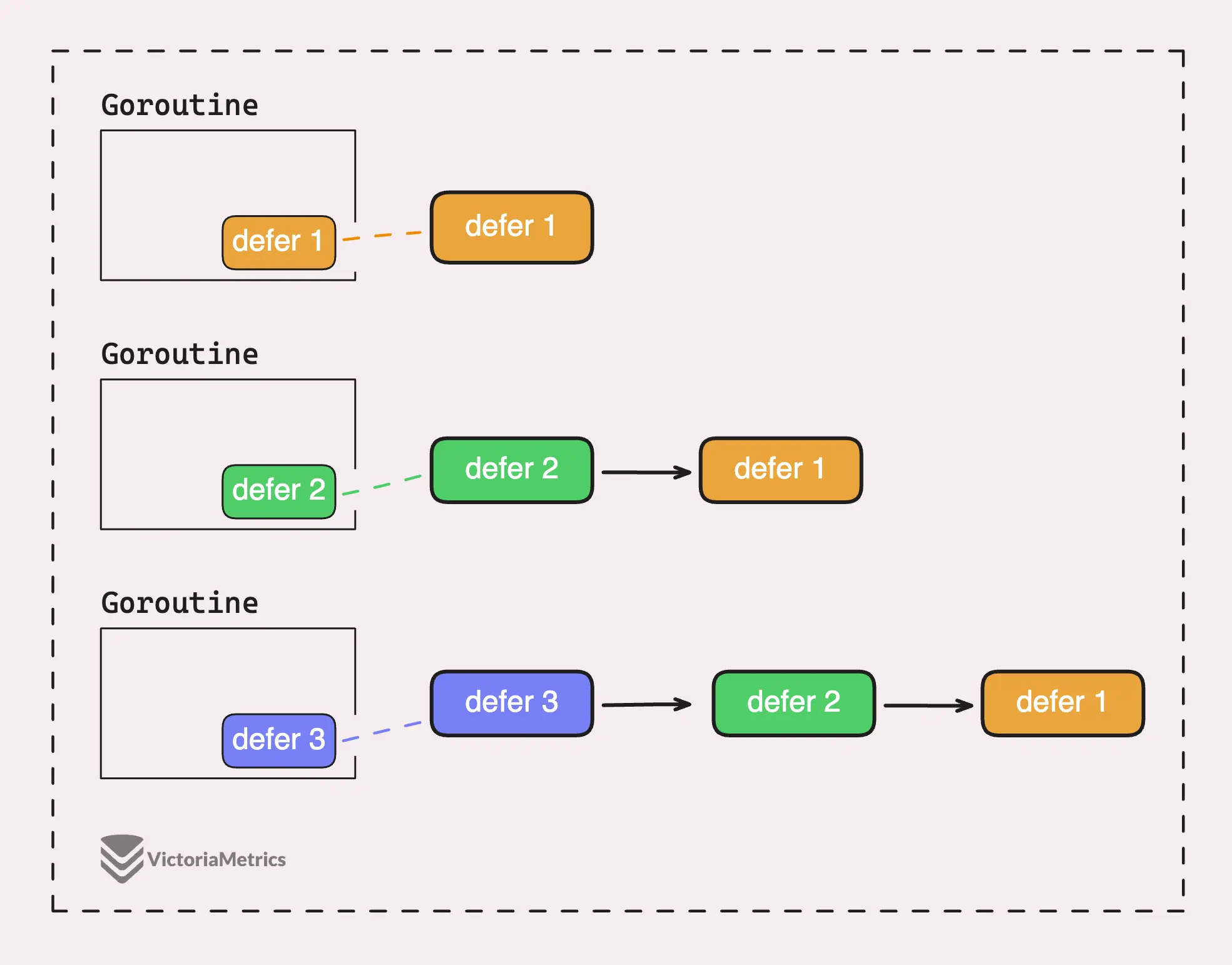
Golang Defer: From Basic To Traps
The defer statement actually has 3 types: open-coded defer, heap-allocated defer, and stack-allocated. Each one has different performance and different scenarios where they’re best used, which is good to know if you want to optimize performance.
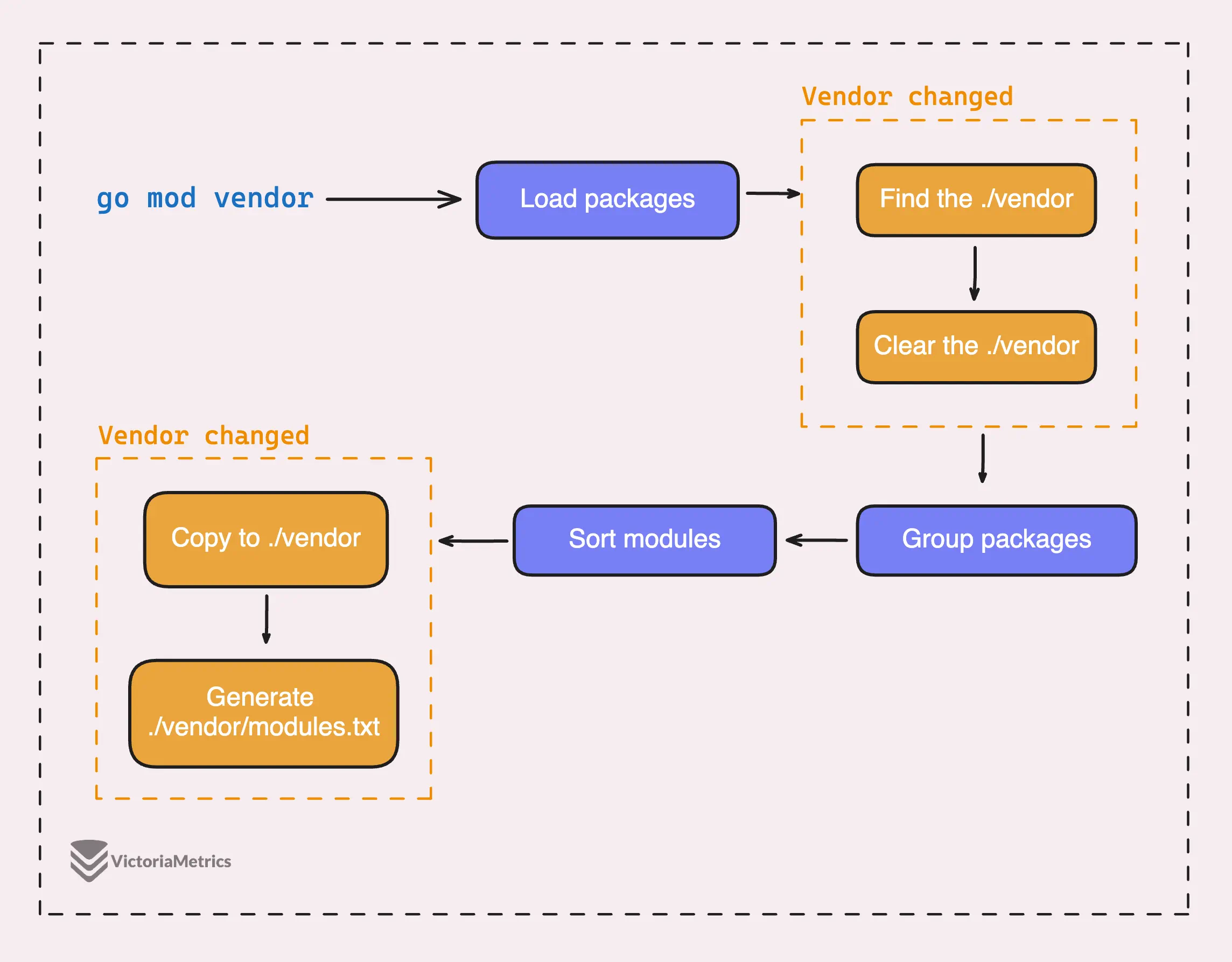
Vendoring, or go mod vendor: What Is It?
Vendoring is a different strategy as it keeps a copy of all your project’s dependencies directly within the project’s directory, rather than relying on an external cache.

Performance optimization techniques in time series databases: sync.Pool for CPU-bound operations
This blog post is the fourth in the series of blog posts based on the talk about ‘Performance optimizations in Go’, GopherCon 2023. It is dedicated to various optimization techniques used in VictoriaMetrics for improving performance and resource usage.

Performance optimization techniques in time series databases: Limiting concurrency
This blog post is a third in the series of the blog posts based on the talk about ‘Performance optimizations in Go’, GopherCon 2023. It is dedicated to various optimization techniques used in VictoriaMetrics for improving performance and resource usage.

Performance optimization techniques in time series databases: function caching
This blog post is a second in the series of the blog posts based on the talk about ‘Performance optimizations in Go’, GopherCon 2023. It is dedicated to various optimization techniques used in VictoriaMetrics for improving performance and resource usage.

Performance optimization techniques in time series databases: strings interning
This blog post is a first in the series of the blog posts based on the talk about ‘Performance optimizations in Go’, GopherCon 2023. It is dedicated to various optimization techniques used in VictoriaMetrics for improving performance and resource usage.