- Blog /
- VictoriaMetrics Long-Term Support (LTS): Current State
VictoriaMetrics Long-Term Support (LTS): Current State
Share:


 The state of VictoriaMetrics LTS releases
We release VictoriaMetrics several times a month, including at least one major update. However, because these new releases often introduce new features, they may be less stable. That’s why we also regularly publish Long-term support releases (LTS) alongside our regular releases. These LTS versions focus exclusively on bug fixes without new features and performance improvements.
We committed to publishing LTS versions every six months and supporting them for one year. Let me provide an overview of the most recent changes in LTS releases.
LTS release: v1.79.x. Deprecated
#
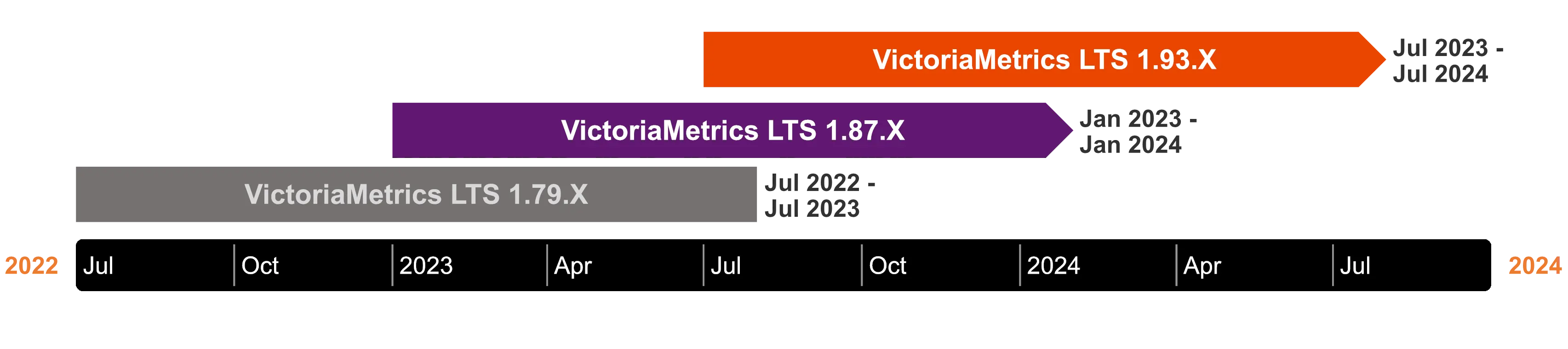
We initially released this version in July 2022 and support for v1.79.14 ended in July 2024.
We recommend upgrading to the recent releases if you still use v1.79.14.
The previous LTS release: v1.87.x
#
The previous LTS release, v1.87.x will continue to receive bug fixes until January 2023.
The current LTS release: v1.93.x
#
The most recent LTS release of VictoriaMetrics brings substantial performance improvements and features compared to 1.87.x.
We will continue to support it until July 2024.
Upgrade from v1.87.x to v1.93.x
#
We recommend reviewing the CHANGELOG between these releases before performing the upgrade to be prepared for new features or potential issues. You can upgrade from v1.87.x to v1.93.x following the guidelines provided in these docs. If you plan to upgrade the VictoriaMetrics cluster, please refer to these instructions.
Version 1.93.x has been thoroughly tested and is used by many people in production. However, please be aware that there have been some non-backward compatible changes introduced between v1.87.x and v1.93.x. If you encounter any issues with v1.93.x, we recommend downgrading to v1.91.3.
We strongly suggest upgrading your Grafana dashboards and alerting rules or VictoriaMetrics components, as each release incorporates various improvements.
Leave a comment below or Contact Us if you have any questions!
comments powered by Disqus
You might also like:
Operator now has Long-Term Support (LTS) version
VictoriaMetrics Operator introduces Long-Term Support (LTS) releases starting with v0.68.x, ensuring stability and a predictable upgrade path for users.
VictoriaMetrics Long-Term Support (LTS): H2 2025 Update
As we’re half-way through the year, we’d like to take this opportunity to provide an update on the most recent changes in our Long-Term Support (LTS) releases.

VictoriaMetrics Long-Term Support (LTS): Commitment, Current and Next LTS Versions
Overview of LTS releases, commitment from the VictoriaMetrics team about them, and migration from one LTS to another